Published on: 17 March 2025
By: Hervé Lancelin
Category: Art Critique
Reading time: 10 minutes
Yang Ermin is an artist who destabilizes with his ability to blend contrasts between millennial tradition and modernity. He has become the leading figure in polychrome wash painting, transforming an ancestral technique into a perfectly contemporary pictorial language.
Listen to me carefully, you bunch of snobs, Yang Ermin is not a minor player in the contemporary art scene. He is the kind of artist who destabilizes with his ability to blend contrasts: millennial tradition and modernity, eternal Orient and frenetic West, immutable landscapes and vibrant still lifes. Born in 1966 in Quyang, in the Chinese province of Hebei, this painter has become the undisputed leader of polychrome wash painting, transforming an ancestral technique into a perfectly contemporary pictorial language.
I could talk to you for hours about his prodigious technique, his skill in marrying ink and color on xuan paper, his unique way of applying successive layers until the wash painting fragments and appears worn in his most recent works. But that would be missing the point. For what makes Yang Ermin great is his ability to engage with the history of art while remaining anchored in his time.
Yang Ermin’s strength lies in his philosophical relationship with color, which fits into a profound reflection on the temporality of art. Here, I must invoke Henri Bergson, whose conception of time as pure duration wonderfully illuminates the work of our Chinese artist. For Bergson, real time is not this spatialized time, divided into successive moments like the points of a line, but an indivisible continuity, a perpetual flux where past and present constantly interpenetrate. Isn’t this exactly what Yang Ermin achieves in his painting? By reintroducing color into traditional Chinese wash painting, he does not merely modernize a millennial technique; he creates a pictorial space-time where the most vivid present merges indissociably with the most distant past.
Consider his landscapes. They are not simple representations of mountains and rivers as Chinese painters have produced for centuries. They are mental spaces where time expands and contracts. “Time is invention or it is nothing at all,” wrote Bergson in Creative Evolution [1]. Yang Ermin seems to have made this maxim his own: each of his works is a temporal invention. His vibrant colors do not seek to reproduce nature faithfully, but to capture this Bergsonian “pure duration”, this perpetual movement of life that escapes all mechanical measure.
Look closely at his compositions where forms seem to simultaneously emerge and dissolve, where the fragmented wash painting evokes this continuous flux of consciousness of which the French philosopher spoke. “Our past follows us, constantly enriching itself with the present it gathers along the way,” Bergson wrote again [2]. Yang Ermin’s works visually embody this conception of time: they accumulate the traces of an ancestral pictorial gesture while absorbing the chromatic vivacity of our time.
And here comes the second concept that seems fundamental to me to understand Yang Ermin: the notion of balance between representation and abstraction found in the aesthetic thought of Étienne Souriau. This French philosopher of the 20th century, in his work The Different Modes of Existence [3], develops the idea that art establishes singular beings, endowed with their own existence, neither totally abstract nor simply mimetic.
When observing Yang Ermin’s still lifes, one is struck by this constant tension between the recognizable and the elusive. His floral compositions, his arrangements of fruits and everyday objects perpetually oscillate between figuration and abstraction. Souriau would speak here of a “superexistence” of the work of art, which surpasses its simple materiality to reach a superior mode of being. “Art is the great intensifier of existence,” he affirmed [4]. And isn’t this exactly what Yang Ermin does with his colored wash paintings? He intensifies the very existence of the objects he represents, conferring upon them a presence that transcends their daily banality.
This intensification in him occurs through a subtle derealization of the represented subject. His flowers, his vases, his landscapes are recognizable, yes, but they are transfigured by a pictorial treatment that tears them away from their ordinary existence. As Souriau wrote, “art does not reproduce the visible, it makes visible” [5], a formula generally attributed to Paul Klee, but which perfectly illustrates Yang Ermin’s approach. His compositions do not slavishly reproduce the real; they make visible another dimension of this real, more intense, more vibrant, more essential.
But I can already hear you, with your usual cynicism: “Another Chinese artist recycling old recipes with a zest of modernity to seduce Western collectors!” You are mistaken. Yang Ermin is not posturing; he is engaged in an authentic search for a personal pictorial language that can transcend cultural boundaries without denying its roots.
His training is revealing of this ambition: after studying at the Nankin Academy of Arts, he continued his journey in Japan, where he obtained a doctorate in aesthetics and literature. This dual cultural anchoring allowed him to develop a singular vision, deeply nourished by the Chinese tradition and open to Western influences. He is intimately familiar with Monet, Cézanne, Van Gogh, but never imitates them slavishly. He dialogues with them as he dialogues with the masters of traditional Chinese painting.
It is this ability to engage in dialogue that makes him a truly contemporary artist. In a world of art often polarized between a nostalgic attachment to traditions and a frantic race for novelty, Yang Ermin forges a middle path, fertile, inventive. His painting is that rare place where time does not flow linearly, but unfolds in superimposed layers, where past and present coexist without neutralizing each other.
Let us return to Bergsonian philosophy to better grasp this phenomenon. For Bergson, memory is not a simple reservoir of memories from which we occasionally draw; it is constitutive of our present experience, constantly coloring our current perception. Similarly, Yang Ermin’s art does not cite the past: it brings it to life in the present of creation. For him, traditional wash painting is not a technique to be preserved as a relic, but a living language to be enriched, transformed.
“The past and the present are not two successive moments, but two elements that coexist: the present is the active element and the past, the element that acts,” wrote Bergson [6]. This active coexistence of past and present is at the heart of Yang Ermin’s work. When he introduces brilliant colors into his wash paintings, he does not break with tradition: he makes it breathe differently, gives it a new breath, a new life.
This vitality is particularly perceptible in his landscapes. Unlike traditional Chinese representations where mountains often appear in an ethereal haze, bathed in dark and monochromatic tones, Yang Ermin’s landscapes vibrate with intense colors. But these colors are not artificially superimposed on the forms; they emerge organically from the wash painting, as if they had always been there, in potential, waiting to be revealed by the artist’s hand.
Here again, Souriau’s thought helps us understand Yang Ermin’s approach. For the French philosopher, the artist is less an ex nihilo creator than an “instaurer” who brings forth forms already virtually present in the material. “The artist dialogues with his material, and it responds to him,” he wrote [7]. Yang Ermin dialogues with ink, xuan paper, colored pigments, and from this dialogue are born works that seem to have always existed, so necessary and evident do they appear once realized.
This evidence, however, should not make us forget the technical complexity of his work. Yang Ermin is a virtuoso who perfectly masters the traditional tools of Chinese painting, the brush, ink, paper, while pushing them towards unexplored territories. His technique of applying wash painting in successive layers, which eventually fragment and appear worn, visually translates this Bergsonian conception of time as a continuous accumulation of experiences.
But technique is never an end in itself for Yang Ermin. It is in the service of a quest for harmony, a subtle balance between forms and colors that characterizes his entire work. As he himself says: “I seek the balance between forms and colors to achieve harmony in my compositions.” This search for harmony is not merely formal; it has a profound existential dimension, which once again joins Bergson’s thought on consciousness as a continuous and harmonious flux.
For the French philosopher, authentic consciousness is not fragmented into separate perceptions, feelings, or ideas, but constitutes a continuous melody where each note blends into the next. Similarly, Yang Ermin’s compositions do not simply juxtapose forms and colors: they blend them into a fluid movement that evokes this melodic continuity of which Bergson spoke.
There is something profoundly musical in Yang Ermin’s painting, a rhythmic quality that transcends mere visuality. His works are not grasped in a single glance; they unfold over time, inviting prolonged contemplation that echoes Bergson’s conception of time as a lived experience rather than a succession of instants.
This temporal dimension is reinforced by the fragmented, almost worn aspect of his recent wash paintings. The colors seem to have been eroded by time, revealing underlying strata, as if the work contained within itself its own history. Here again, Bergson’s thought enlightens us: “Duration is the continuous progress of the past which gnaws into the future and which swells as it advances” [8]. Yang Ermin’s works literally embody this “gnawing” of time, this continuous erosion which, paradoxically, enriches rather than impoverishes.
At the same time, Souriau’s theory of “different modes of existence” offers us an additional key to understanding the ontological plurality of Yang Ermin’s works. For the French philosopher, artistic objects possess a plural existence: they exist physically as material objects, aesthetically as bearers of sensible values, symbolically as vectors of cultural significations, and really as entities endowed with their own power.
Yang Ermin’s paintings fully manifest this existential plurality. They are at once physical objects (ink and pigments on xuan paper), aesthetic compositions (play of colors and forms), heirs to a millennial tradition (Chinese wash painting), and autonomous presences that seem to radiate a life of their own. As Souriau wrote, “the accomplished work of art has a kind of sovereign presence” [9]. This sovereignty is palpable in Yang Ermin’s best creations, which impose themselves on the viewer with a quiet authority.
What is particularly interesting about this artist is his ability to navigate between different pictorial traditions without ever falling into superficial eclecticism. He does not juxtapose Chinese and Western elements; he integrates them organically into a coherent language. This integration recalls Bergson’s conception of creative evolution, where each new state preserves something of the previous states while transforming them.
Yang Ermin’s painting is truly evolutionary in this Bergsonian sense: it preserves the essence of the Chinese wash painting tradition while enriching it with new contributions, notably color, which transform it profoundly without denaturing it. It is a painting that honors its roots while resolutely projecting itself into the future.
One might see in this approach a form of conservatism, a desire to preserve a threatened tradition at all costs. But this would be to misunderstand the radical nature of his artistic project. Yang Ermin does not preserve the wash painting tradition as a specimen in formalin; he brings it to life, makes it breathe, evolve. He embodies what Bergson called the “élan vital”, this creative impulse that traverses the entire evolution of life and expresses itself with particular intensity in art.
Yang Ermin is much more than a clever synthesizer of Eastern and Western traditions. He is an artist who thinks deeply about the temporality of his art, who inscribes each of his works in a fecund dialogue between past and present, between memory and creation. His painting is a visual meditation on Bergsonian duration, on this indivisible continuity of lived time that transcends mere chronological succession.
At the same time, his works institute sensible presences that surpass their simple materiality, embodying this “superexistence” of which Souriau spoke, this intensification of being that is the hallmark of true art. Between Bergson’s temporal fluidity and Souriau’s ontological plurality, Yang Ermin traces a singular path in contemporary art, a path that belongs only to him but invites us all to follow.
So, the next time you come across a work by Yang Ermin in a gallery or museum, stop. Take your time. Let yourself be impressed by his vibrant colors, by his compositions that are both structured and fluid. And perhaps then you will feel what Bergson called “pure duration” and Souriau “instituted presence”, this ineffable quality that makes great works of art not mere objects to be contemplated, but experiences to be lived fully.
For that is what is at stake with Yang Ermin: not admiring from a distance a virtuoso technique or a clever blend of influences, but entering a pictorial space-time where our own consciousness can blossom, expand, merge into this continuous flux of forms and colors that is the signature of this great contemporary Chinese artist.
- Henri Bergson, Creative Evolution, Paris, PUF, 1907.
- Henri Bergson, Matter and Memory, Paris, PUF, 1896.
- Étienne Souriau, The Different Modes of Existence, Paris, PUF, 1943.
- Étienne Souriau, The Correspondence of Arts, Paris, Flammarion, 1969.
- Étienne Souriau, Vocabulary of Aesthetics, Paris, PUF, 1990.
- Henri Bergson, Mind-Energy, Paris, PUF, 1919.
- Étienne Souriau, The Future of Aesthetics, Paris, Alcan, 1929.
- Henri Bergson, Creative Evolution, Paris, PUF, 1907.
- Étienne Souriau, The Different Modes of Existence, Paris, PUF, 1943.
杨佴旻:多彩水墨的艺术大师
最初发布时间: 17 日3月 2025
作者: 埃尔韦·朗斯兰(Hervé Lancelin)
阅读时间: 12 分钟
杨佴旻是一位能够把千年传统与炫目现代性对比共存的画家,从而使人感到不安。作为多彩水墨绘画的领军人物,他将古老技法转化为一种极具现代感的绘画语言。
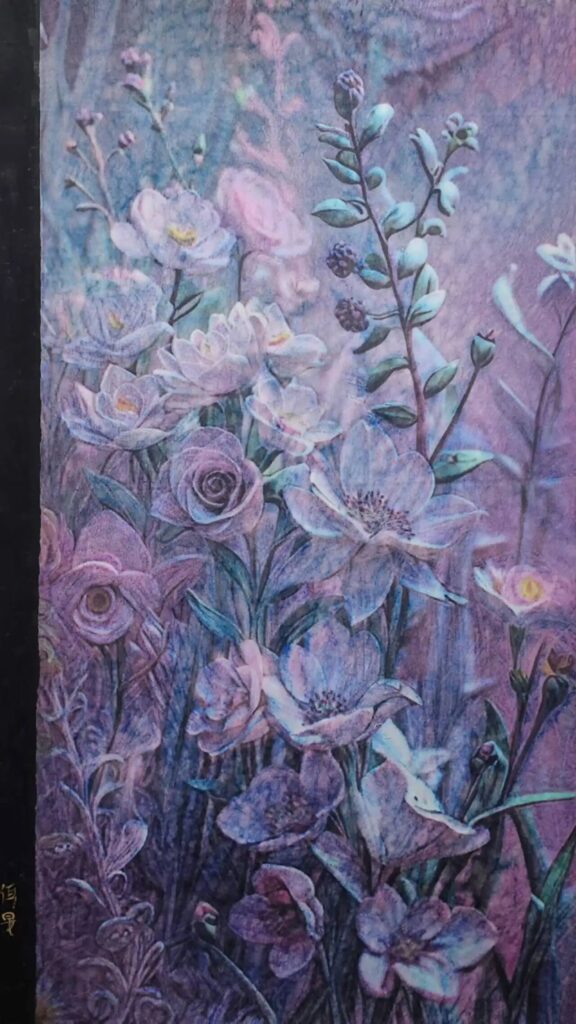
杨佴旻作品 纸本设色 185x95cm 2025
请认真听我说,你们这群自命不凡的人,这位杨佴旻在当代艺术界可不是个小角色。他是那种通过将对比并存的能力打破你平衡的艺术家:千年传统与炽烈现代,永恒东方与狂热西方,永恒风景与充满活力的静物。他出生于中国河北曲阳,成为多彩水墨画的无可争议的领军人物,将一种古老技法转化为现代艺术语言。
我可以长时间讲述他惊人的技巧,他如何娴熟地将墨与色彩结合在宣纸上,如何独特地多层施染,直到水墨层次瓦解,在他最近的作品中呈现出磨损般的效果。但那会忽略重点。杨佴旻的伟大在于他能够对话艺术史,同时深深扎根于他的时代。
杨佴旻的力量在于他与颜色的哲学关系,这体现在他对艺术时间性的深入思考中。在这里,我不得不提亨利·柏格森,他将时间视为纯粹的持续,完美照亮了这位中国艺术家的作品。对柏格森来说,真实的时间不是空间化的时间,像线上的点一个接一个划分,而是不可分割的连续流,过去与现在不断交融。这不正是杨佴旻在他的绘画中所实现的吗?通过在传统中国水墨画中重新引入色彩,他不仅是现代化了千年的技术,更创造了一个绘画时空,在这里,最鲜活的现在与最遥远的过去不可分割地融合在一起。
让我们来看看他的风景画。这些并不是中国画家几个世纪以来描绘的简单的山水画。这是精神空间,时间在其中拉长又收缩。正如柏格森在《创化进化》中写道:”时间是发明,否则它一无所有”[1]。杨佴旻似乎将这条格言奉为圭臬:他的每一件作品都是时间的发明。他鲜明的色彩并不追求对自然的忠实再现,而是捕捉那个柏格森意义上的“纯粹持续”,即生命永不停息的运动,超越了任何机械计量。
仔细观察他的构图,那些形态似乎同时在生成与消解,碎裂的水墨渲染唤起法国哲学家所言意识的连续流动。柏格森还写道:”过去伴随着我们,不断丰富着它在路途中收集的现在”[2]。杨佴旻的作品以视觉形态体现了这种时间观念:它们积累着古老绘画动作的痕迹,同时吸纳着我们时代色彩的生气。
这时我认为理解杨佴旻的第二个根本概念出现了:表象与抽象之间的平衡,这在20世纪法国哲学家埃蒂安·苏里奥的美学思想中得到体现。在他的著作《存在的不同模式》中,苏里奥提出艺术创造了独特的存在体,具有自身存在性,既非完全抽象,也非简单模仿[3]。
当你观察杨佴旻的静物画时,会被那持续不断的可识别与难以捉摸之间的张力震撼。他的花卉构图、水果与日常物品的摆设在形象与抽象之间不断摇摆。苏里奥会称之为艺术品的”超存在”状态,它超越单纯的物质性,达到一种更高的存在模式。”艺术是存在的伟大强化者”,他这样断言[4]。这不正是杨佴旻通过色彩渲染所做的吗?他强化了所描绘物体本身的存在感,赋予了它们超越日常平凡的存在性。
这种强化在他的笔下通过对被描绘对象的微妙去现实化实现。他的花卉、花瓶、风景固然可辨认,但画法使它们脱离了平凡的存在。正如苏里奥写到的,”艺术不复制可见的,它使之可见“[5],这句话通常归功于保罗·克利,但完美地说明了杨佴旻的创作宗旨:他的作品不盲从地复制现实,而是使现实的另一维度得以显现,更加浓烈、生动、核心。我听到你们开始带着惯有的玩世不恭说:”又一个中国艺术家,靠翻炒老招数,加点现代元素来讨好西方收藏家!“别误会。杨佴旻不是摆姿态,他是真正追求个人绘画语言,努力超越文化疆界而不背弃自己根源的艺术家。
他的教育背景恰好反映了他的这种抱负:在南京艺术学院学习之后,他前往日本继续深造,获得了美学与文学博士学位。这种双重文化根基使他形成了独特的视野,既深受中国传统的滋养,又开放接受西方影响。他对莫奈、塞尚、梵高了如指掌,但从不奴颜婢膝地模仿他们。他与他们对话,就像他与中国传统绘画大师对话一样。
正是这种对话能力使他成为真正的当代艺术家。在艺术世界中,往往在对传统的怀旧依恋与对新奇的疯狂追求之间极化,杨佴旻开辟了一条中间地带,,富饶而富有创造性。他的绘画是一个罕见的空间,时间不再线性流逝,而是呈现为层叠堆积的状态,过去与现在共存而不互相抵消。
让我们回到柏格森的哲学,以更好地理解这一现象。对于柏格森来说,记忆不仅仅是一个我们偶尔汲取的简单记忆库;它构成了我们当前的经验,持续地为我们当前的感知染色。同样,杨佴旻的艺术并不是简单地引用过去,而是在创作的现在让过去焕发生机。传统的水墨洗染对他来说不是一种如文物般需要保护的技法,而是一种需要丰富和变革的活语言。
“过去和现在并非两个连续的时刻,而是共存的两种元素:现在是主动元素,过去是起作用的元素,“柏格森如是写道[6]。这种过去与现在的主动共存是杨佴旻作品的核心。当他在水墨洗染中引入鲜艳的色彩时,他并未背离传统,而是以另一种方式让传统呼吸,赋予它新的生命力。
这种生命力在他的风景画中尤为明显。与中国传统绘画中山峦常常笼罩在朦胧的薄雾中,呈现暗淡单色调不同,杨佴旻笔下的群山充满了浓烈的色彩。但这些色彩不是生硬地覆盖在形态之上;它们有机地从洗染中涌现,就仿佛这些色彩一
直潜伏其间,等待艺术家的手将其唤醒。
这里,苏里欧的思想再次帮助我们理解杨佴旻的创作方法。这位法国哲学家认为,艺术家不是从无中创造,而是“设立者”,使潜藏于物质中的形式显现。”艺术家与他的材料对话,而材料回应他,“他写道[7]。杨佴旻与墨水、宣纸、彩色颜料对话,正是在这种对话中诞生了那些似乎自始就存在的作品,因为它们一旦完成看上去就必不可少且理所当然。然而,这种理所当然不应让我们忽视他作品背后的技术复杂性。杨佴旻是一个艺术技巧大师,完美掌握传统中国绘画的工具,,毛笔、墨水、纸张,同时又将它们推向未曾涉足的领域。他采用多层叠加的水墨洗染技法,最终这些层次破碎,呈现出磨损的视觉效果,形象地传达了柏格森关于时间作为不断累积体验的观念。
但对杨佴旻来说,技法从来不是目的本身。它服务于对和谐的追求,即形态与色彩之间微妙的平衡,这一特点贯穿于他的全部作品。正如他自己所说:“我追求形态与色彩之间的平衡,以达到作品构图中的和谐。”这种对和谐的追求不仅仅是形式上的;它具有深刻的存在维度,再次呼应了柏格森关于意识是连续且和谐流动的思想。
对于这位法国哲学家来说,真正的意识不是分割开来的感知、情感或独立的思想,而是一首持续的旋律,每个音符融入下一个音符之中。同样,杨佴旻的构图不仅仅是形态和色彩的并置:它们相互融合,形成流畅的运动,唤起柏格森所说的这一旋律连续性。
杨佴旻的画作中有一种深刻的音乐感,一种超越单纯视觉的节奏感。他的作品不是一眼就能完全展示给观众;它们在时间中展开,邀请人们进行持久的冥思,这与柏格森将时间视为体验而不是瞬间的连续性的理念产生了共鸣。
这种时间维度被他最近水墨画几乎碎片化、接近磨损的外观所强化。颜色似乎被时间侵蚀,显露出下面的层次,仿佛作品本身蕴含着自己的历史。在这里,柏格森的思想再次为我们照亮了方向:”持续是过去不断侵蚀未来并随着推进而膨胀的过程”[8]。杨佴旻的作品字面上体现了这种时间的“侵蚀”,这种持续的磨损,矛盾的是,它丰富了作品而非让其贫瘠。
与此同时,苏里欧关于”不同存在模式”的理论为理解杨佴旻作品的本体多样性提供了另一把钥匙。对于这位法国哲学家来说,艺术品具有多重存在:它们物理上作为物质对象存在,同时在审美上体现感性价值,在象征意义上作为文化意义的载体存在,在现实层面上作为具有自身力量的实体存在。
杨佴旻的绘画作品充分体现了这种存在的多重性。它们既是物理对象(宣纸上的墨和颜料),又是审美构图(色彩与形态的游戏),是千年传统(水墨画)的继承者,同时也是自主的存在,似乎散发出自身的生命力。正如苏里欧所写,“完成的艺术作品具有某种主权般的存在感”[9]。这种主权感在杨佴旻最好的作品中可感知,它们以平静的权威性占据观众的视线。
这位艺术家特别有趣之处在于他能够游刃有余地穿梭于不同的绘画传统之间,而不陷入肤浅的折衷。他并不简单地将中西元素并列;而是有机地将它们融入一个连贯的语言。这种融合让人想起柏格森的创造性进化观念,每一个新状态都保
留并转化了之前的状态。
杨佴旻的绘画在柏格森意义上确实是进化的:它保留了中国水墨传统的本质,同时通过引入新元素,尤其是色彩,深刻地丰富了它,而并未使其失去本质。这是一种既尊重根基又坚定面向未来的绘画。
可以将这种做法视为一种保守主义,是不惜一切代价维护一项濒临失传的传统的意愿。但这将低估其艺术项目的激进性。杨佴旻并非像保存福尔马林标本那样保存泼墨传统;他让它活着,呼吸,演变。他体现了柏格森所说的“生命冲动“,即贯穿生命进化全过程并在艺术中特别强烈表达的创造性推动力。
杨佴旻不仅仅是一个巧妙地融合东西方传统的合成主义者。他是一位深入思考自己艺术时间性的艺术家,他让每一件作品都处于过去与现在、记忆与创造之间的富有成果的对话之中。他的绘画是对柏格森时间持续性的视觉冥想,是对那种超越简单时间顺序的不可分割的生命时间连续性的探讨。与此同时,他的作品建立了超越其简单物质性的感知存在,体现了苏里奥所说的”超存在”,即艺术特有的存在强化。在柏格森的时间流动性与苏里奥的本体多样性之间,杨佴旻在当代艺术中开辟了一条独特道路,属于他自己,却邀请我们所有人跟随。
所以,下次当你在画廊或博物馆遇到杨佴旻的作品时,请停下来。花点时间。让自己沉浸在他那充满活力的色彩中,在他那既结构化又流畅的构图里,或许你将感受到柏格森所谓的“纯时间”和苏里奥的”建立的存在”,这是一种难以言喻的品质,使伟大的艺术作品不仅是简单的观赏对象,更是可以全情投入的体验。
这正是杨佴旻作品的意义所在:不只是远距离欣赏一种高超技巧或复杂的影响融合,而是进入一个绘画的时空,在那里我们自己的意识能成长、扩展,并融合于流动不断的形状与色彩中,这正是这位杰出中国当代艺术家的标志。
1.亨利·柏格森,创造性进化,巴黎,PUF出版社,1907年。
2.亨利·柏格森,物质与记忆,巴黎,PUF出版社,1896年。
3.埃蒂安·苏里奥,不同存在方式,巴黎,PUF出版社,1943年。
4.埃蒂安·苏里奥,艺术的关联,巴黎,Flammarion出版社,1969年。
5.埃蒂安·苏里奥,美学词汇,巴黎,PUF出版社,1990年。
6.亨利·柏格森,精神能量,巴黎,PUF出版社,1919年。
7.埃蒂安·苏里奥,美学的未来,巴黎,Alcan出版社,1929年。
8.亨利·柏格森,创造性进化,巴黎,PUF出版社,1907年。
9.埃蒂安·苏里奥,不同存在方式,巴黎,PUF出版社,1943年。
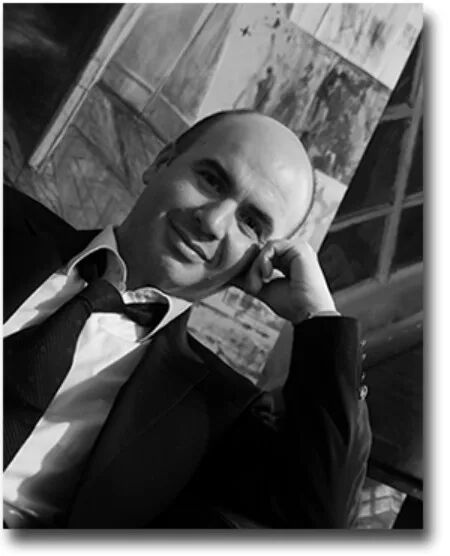
埃尔韦·朗斯兰(Hervé Lancelin)是一位聚焦“战后艺术”、当代艺术和原始艺术的著名收藏家,策展人。他是法国当代艺术收藏家协会ADIAF的成员,该协会与巴黎蓬皮杜中心合作颁发年度马塞尔·杜尚奖。2011年,他担任了马塞尔·杜尚奖的评选委员会成员;自2010年开始,他一直是现代艺术、当代艺术和原始艺术博物馆之友的受托人,经常就当代艺术和艺术收藏的相关主题进行演讲。多年来,他积累了一个美术馆级别的艺术收藏品,包括来自世界各地艺术家的数百件作品。他在卢森堡创立了一个非营利性机构——卢森堡美术馆(Pinacothèque de Luxembourg),担任总裁与管理者,为艺术家举办展览,并向公众开放。2015年,设立“卢森堡国际艺术奖”(Luxembourg Art Prize),被列入全球十大艺术奖项之一,旨在为艺术家接触到更多的收藏家和收藏机构搭建广阔的平台。这也极大推动了卢森堡大公国在当代国际艺术中的影响力。